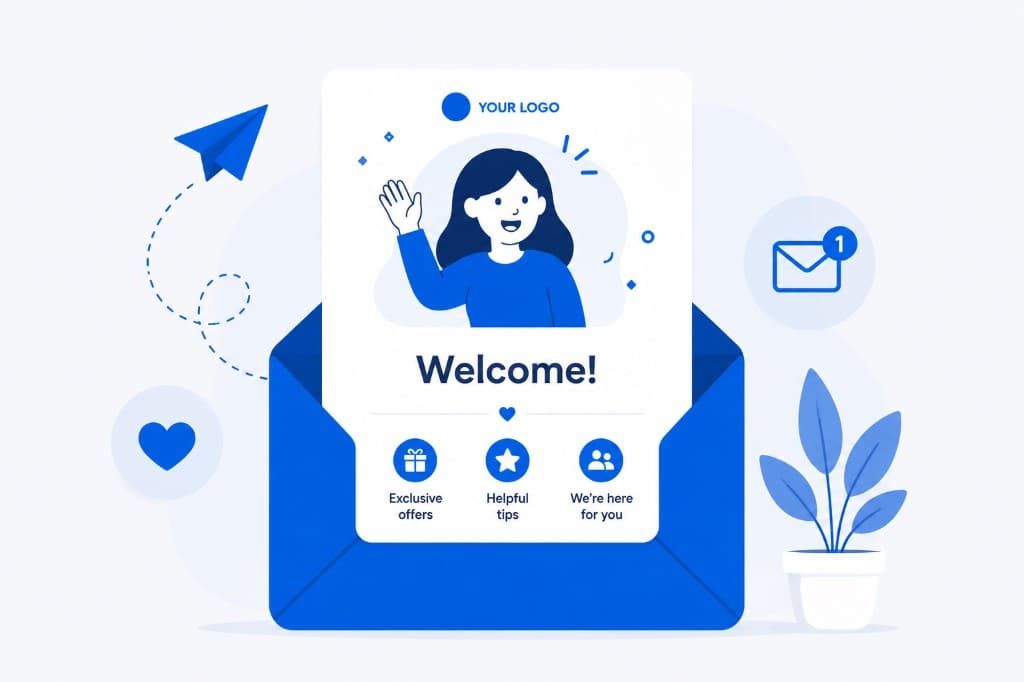
Welcome email good practices
-
Start the message with “thank you” and “welcome”. Those two words are pretty much a must if you want to make a good first impression. Just like in a real conversation, they show good manners. Thank the user for registering with you or for subscribing to a newsletter, and welcome them to your community. Think about the words you choose, and make the person feel welcome.
-
Send the message right after the registration. That’s what a user or customer expects when they set up an account or subscribe, so it’s worth remembering. The email confirms they did it correctly and are now part of your community.
-
Include the details they entered during registration. If the user had to pick a login, use it in the email to make the message personal. Details like that show you care about them and treat them with respect.
-
Don’t try to cram too much into the first email. Information overload will put the recipient off reading it, so include what’s necessary and no more than that. If you want to give somebody more on a topic, add a link and let them decide whether to read on. An image with all the necessary links works well too, and it makes the message more colorful and eye-catching. For example, instead of a long block of text about the company, you can make a graphic with the company logo that takes the user to a page with more details. That tends to bring in more clicks, and visuals like that give the recipient the information they need anyway.
-
If there’s something you don’t have room for in the first email, don’t force it in. The first email is important, but a follow-up works just as well for whatever is left over. You can use it to say more about your company, in a way that’s clear and easy to take in.
-
Build a relationship with the recipient. Address them in a friendly way and use “you” in every email. Using their name makes the message more personal still. It has a real effect on how the user feels about your brand and it makes the email nicer to read, so they’re more likely to open the next one.
-
Make the message a good foundation for the ones that follow. If it stirs up positive emotions and gets a user to do something, they’ll be more willing to read your next email. Design matters here. Make sure the email looks as good as it can and displays properly on all devices.
-
Keep the promises you made during the registration process. Did you offer any extra benefits? Then put them in the email. Mention the offer near the beginning, and don’t forget about the discount you promised. Show the recipient you’re worth their trust.
-
Think about a reward for registering. A small gift makes a good first impression, so keep it simple and make it something that catches the subscriber’s eye. Then keep that promise later on. Not keeping it will put people off any further contact with you.
-
Make sure new users know what they get out of working with your brand. Tell them you’ll be sending emails with discounts and special offers put together just for them.
Our template
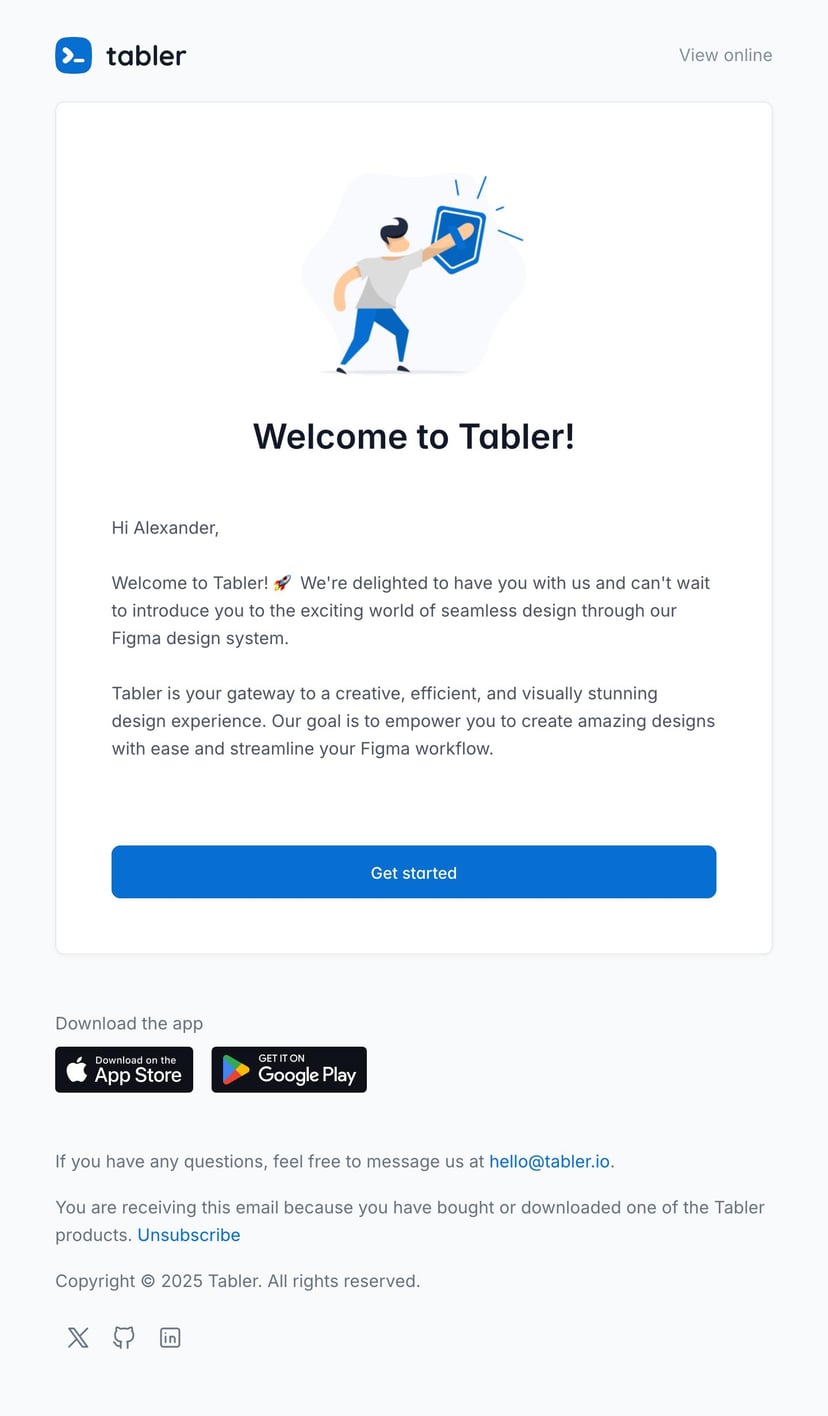
Now you know what a welcome email should look like. If you’re after templates for that first email, have a look at Tabler Emails, where you’ll find 80 ready-made templates you can customize and adapt to your business.